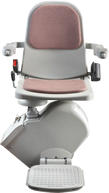


Straight Stairlift
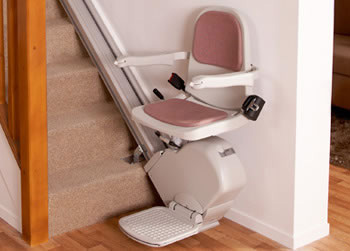 The straight staircase choice can give you the continue full use of the home you love
A straight can blend seamlessly into your home, and the smooth start and stop mechanism allows you to glide effortlessly up and down the stairs.
Contact us now for your FREE survey and quote, and one of our friendly, experienced local stairlift surveyors will provide all the advice you need.
- Next day installation available
- Stairlift fits to the stairs, not the wall
- Perch or Sit/Stand stairlift options available for narrow stairs
- Outdoor stairlift option available
- Slimline fold-away design
Curved Stairlift
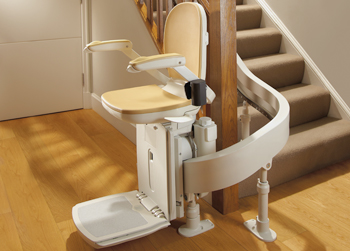
An innovative, unique solution for curved staircases
The Curved Stairlift comes with all the comfort and safety features that you’d expect. And due to the stairlift’s unique modular curved rail system, it can be install in a matter of days rather than weeks.
Contact us now for your FREE survey and quote, and one of our experienced local surveyors will provide all the advice you need.
- Fits to the stairs, not the wall
- Slimline fold-away design
- Unique modular rail system
- Automatic speed adjustment to ensure optimum performance
Outdoor Stairlift
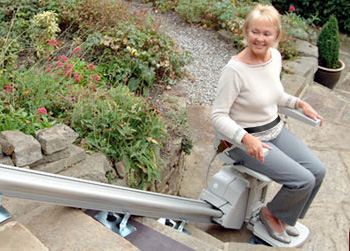
A stair lift designed to resist the elements
For users who require a stairlift outside their home, this type of stairlift can provide a fully weather-proofed practical solution ideal for outdoor use. With all of the same features and options as a Straight Stairlift, the Outdoor stairlift comes supplied with a durable waterproof cover for extra protection.
Contact us now for your FREE survey and quote, and one of our experienced local surveyors will provide all the advice you need.
- Next day installation available
- Fits to the stairs, not the wall
- Unique design
- Slimline fold-away design